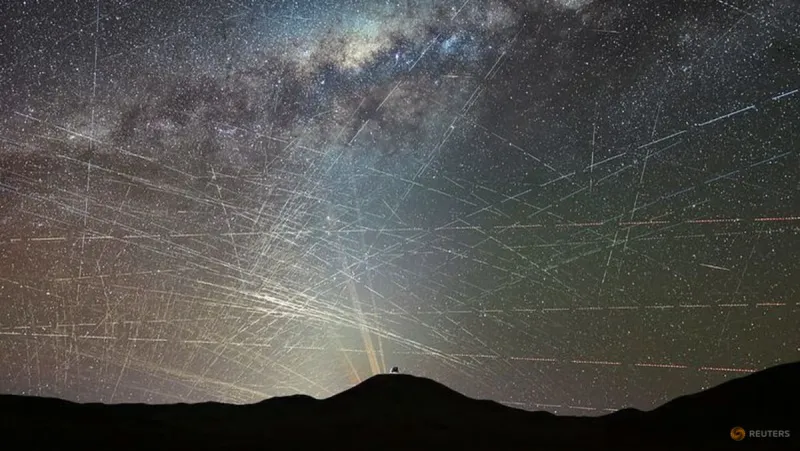
The European Southern Observatory (ESO), which operates telescopes in the Atacama Desert in northern Chile, has released a study highlighting the growing threat that satellite constellations pose to astronomical observations. The study, published on August 20, 2026, indicates that the increasing number of satellites in low Earth orbit is creating bright trails that interfere with scientific data collection.
According to the ESO, the number of active satellites has surged in recent years, with thousands more expected to launch in the coming decade. These satellites reflect sunlight, leaving streaks on long-exposure images taken by ground-based telescopes. The study found that a significant percentage of images from ESO's Very Large Telescope (VLT) and other facilities are now affected, potentially compromising research on distant galaxies, exoplanets, and other cosmic phenomena.
The report emphasizes that while satellite constellations offer benefits such as global internet coverage, their impact on astronomy is a growing concern. ESO officials are calling for international cooperation to mitigate these effects, including measures like darker satellite surfaces, better orbital coordination, and advanced image processing techniques to remove satellite trails.
Astronomers are particularly worried about the upcoming Extremely Large Telescope (ELT), currently under construction in Chile, which will be more sensitive to light pollution. The study urges regulatory bodies to consider the impact on science when approving new satellite launches.