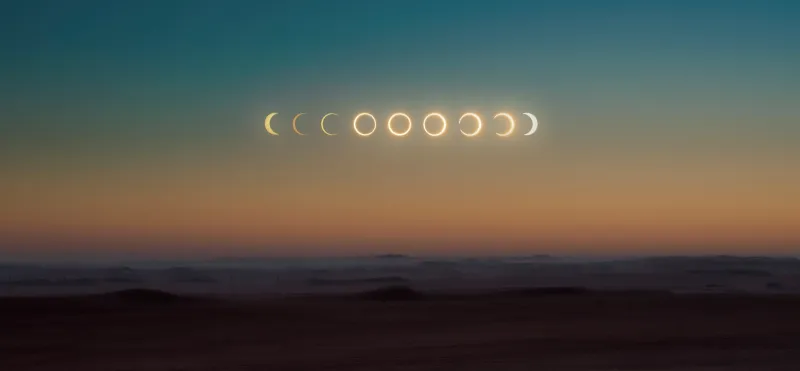
On August 12, 2026, a total solar eclipse will occur, with the path of totality crossing parts of the Arctic, including Greenland, Iceland, and northern Spain. A partial eclipse will be visible across much of Europe, North Africa, and eastern North America.
Astronomers emphasize that looking directly at the Sun without proper eye protection can cause serious eye damage, including permanent blindness. The only safe way to view a solar eclipse is through certified eclipse glasses or handheld solar viewers that meet the ISO 12312-2 international standard.
Regular sunglasses, even very dark ones, are not safe for viewing the Sun. Also, do not use cameras, binoculars, or telescopes without a special solar filter, as they can concentrate sunlight and damage the eyes instantly.
For those in the path of totality, it is safe to remove eclipse glasses only during the brief phase of totality when the Moon completely covers the Sun. As soon as the Sun begins to reappear, glasses must be put back on.
If you miss this eclipse, the next total solar eclipse visible in North America will occur on March 30, 2033, and in Europe on September 2, 2035.