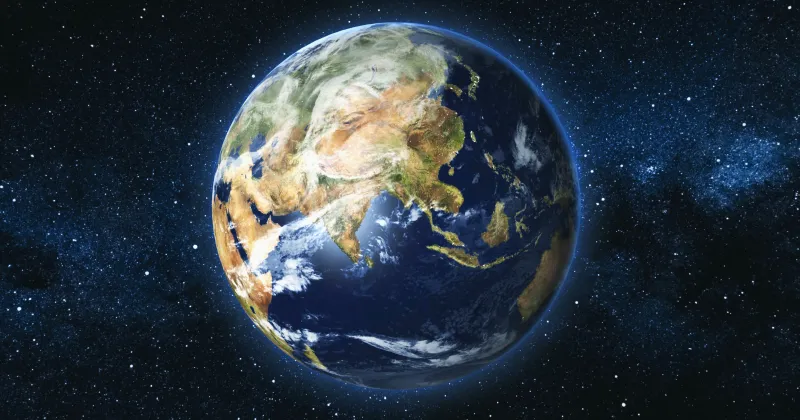
Compressing Earth's 4.5-billion-year history into a single calendar year is a powerful thought experiment that makes the planet's immense timescale tangible. According to widely cited estimates, the Earth formed about 4.54 billion years ago. In this compressed timeline, the first simple life (prokaryotes) appears around March, while more complex life (eukaryotes) emerges in November.
Modern humans (Homo sapiens) are a very recent arrival. Based on fossil and genetic evidence, Homo sapiens appeared roughly 300,000 years ago. In the calendar-year model, this places humans on December 31 at approximately 11:36 pm. Agriculture, which began around 12,000 years ago, would occur at about 11:59 pm on the same day.
All recorded history—from the invention of writing around 5,000 years ago to the present—occupies the final seconds of the year. This perspective highlights how brief human civilization is compared to Earth's long history.
The exact timestamps vary slightly depending on the age estimates used for Earth and human evolution, but the overall message remains consistent: human existence is a tiny fraction of the planet's story.