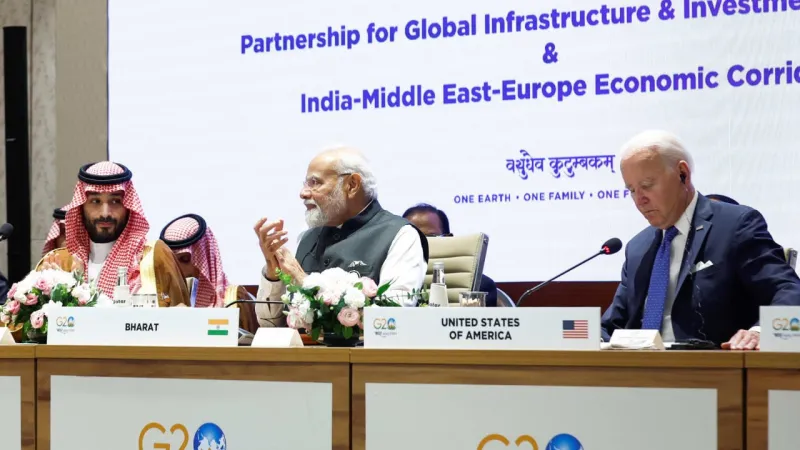
Iranian officials have expressed concern that the India-Middle East-Europe Corridor (IMEC), a proposed economic corridor linking India to Europe via the Middle East, could diminish the strategic importance of the Strait of Hormuz. The strait, through which about 20% of the world's oil passes, is a key chokepoint for global energy supplies and a source of leverage for Iran.
According to reports from Iranian media and analysts, the IMEC project, announced in September 2023 during the G20 summit in New Delhi, aims to create a rail and shipping network connecting India, the United Arab Emirates, Saudi Arabia, Jordan, Israel, and Europe. This alternative route could bypass the Strait of Hormuz, reducing Iran's ability to threaten or control maritime traffic in the region.
Iran's elite military and political circles are reportedly worried that the corridor would offer a viable alternative for trade and energy flows, undermining Tehran's strategic position. The IMEC is seen as part of broader efforts to integrate Israel into regional infrastructure projects, which Iran opposes.
As of July 2026, the IMEC remains in early planning stages, with feasibility studies and diplomatic negotiations ongoing. No concrete construction timeline has been announced. The project faces significant geopolitical hurdles, including tensions between Saudi Arabia and Iran, and the Israeli-Palestinian conflict.
Experts note that while the IMEC could eventually reduce dependence on the Strait of Hormuz, it is unlikely to fully replace it in the near term due to the strait's established infrastructure and the high volume of oil and gas shipments.