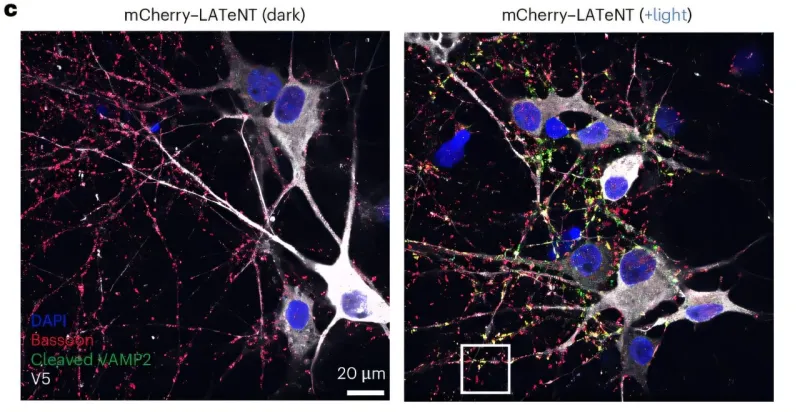
Researchers at the Daegu Gyeongbuk Institute of Science and Technology (DGIST) and Stanford University have developed a novel optogenetic tool called LATeNT (Light-Activated Temporal NeuroTransmission) that can reversibly control synaptic proteins using light. The work, led by Professor Ji Won Um of DGIST's Center for Synapse Diversity and Specificity and Professor Alice Ting of Stanford, was published in the journal Nature Neuroscience on August 19, 2026.
LATeNT uses a light-sensitive domain to rapidly and reversibly inactivate specific synaptic proteins, allowing researchers to turn neuronal communication on and off with high precision. In tests, the team applied LATeNT to the protein PSD-95, a key scaffold at excitatory synapses, and demonstrated that light exposure could transiently disrupt synaptic transmission, with recovery within minutes.
This technology offers a significant advance over existing methods, which are often slow or irreversible. By enabling rapid, reversible control, LATeNT allows scientists to study the dynamic roles of synaptic proteins in real time, potentially leading to new insights into learning, memory, and neurological disorders.
Professor Um noted that LATeNT could be applied to other proteins and in living animals, opening new avenues for understanding brain function and developing future therapeutic strategies.